Blog

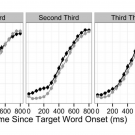
Dr. Georgia Zellou's Talk on Clear Speech in Tashlhiyt Berber

Introduction:

Dr. Georgia Zellou is an Associate Professor of Linguistics at UC Davis. Her research program is focused on understanding how phonetic detail is cognitively represented and how phonetic and phonological patterns develop, evolve and are used, socially and functionally, in linguistic communication.

Everything about language...The Language Research Cluster Blog

Translingual Competence and Other Novel Notions in Sociolinguistics for Heritage Language Education

Leeman and Serafini’s Sociolinguistics for Heritage Language Educators and Students: A Model for Critical Translingual Competence (2016, available here) pushes the envelope on traditional Heritage Language (HL) sociolinguistic notions that have dominated the field.

Phonetic Modulation in Bilingual Speech - An Inspection of A Current Methodology

In Fricke, Kroll, and Dussias’s 2015 paper, Phonetic variation in bilingual speech: A lens for studying the production–comprehension link (Download here with UC Davis Credentials), they investigate the mechanics of codeswitching in bilingual speakers. The key findings are that the codeswitches are preceded by phonological bleed from the new target language (such as a change in voicing strategy), as well as by a net slowing of speech rate.

Keeping my Language and Identity Intact

Language is not only a form of expression for message delivery but also a way to keep culture and identity intact. There are thousands of languages across the world, each possessing sounds and words distinct from one another, which arise from the changes in the culture of the people speaking those languages. Conversely, the language then becomes a part of those people’s identity. Similar to this, I consider the Hindi language as part of my native identity as it is also the national language of India. I was born and raised in India where I was surrounded by Hindi in every aspect of my life.

Remembering the Positives of Being a Non-Native Speaker

After five years of teaching French at the university level, I have been asked some variation of the same question countless times: “Are you French? How can you teach French if it’s not your first language?”.  Disregarding the fact that a large number of French speakers are not actually French, this question is flawed at a systemic level.  It implies that as a non-native speaker, I am somehow less qualified to teach a language because I am not a native speaker. At the beginning of my teaching career, I bought into this theory and often felt like a fraud.

A Lifelong Journey

Growing up in an immigrant family wasn’t always easy. I was the designated translator between my parents and anyone who didn’t speak Chinese (Cantonese). One of the struggles I faced with translating was that certain words and phrases couldn’t be conveyed through translation. Although it was difficult at times, I am glad that my parents gave me these language tools and helped I needed along the way.

Decoupling Linguistic & Cultural Continuity in Native American Language Revitalization

I imagine that most readers of this blog would agree that one of the most main reasons to learn a new language is to expand one’s cultural horizons. Here at UC Davis, we expect students to participate in language classes as part of their academic training not only so that they will be able to communicate (in a coarse-grained instrumentalist sense) with people who happen to speak a different language, but also because of the insights into another culture that can be gained by engaging in the study of a new language.

Learning Hindi is a passion, not an obligation

Learning is a process we continue over the course of our lives. The more effort and time we commit to learning, the more we benefit from it.

The Importance of Foreign Language Learning in General Education

I have always believed that learning a foreign language is much more than just achieving proficiency in a foreign tongue. In addition to speaking a foreign language, foreign language education comes with acquiring a global perspective, cross-cultural communication skills and critical thinking. It is an essential component of general education and personal growth. I personally have been learning various languages for many years, taught foreign languages on and off for three years and continue to find excitement in learning new languages.